Based on USDA climate data — not generic gardening advice
Free Garden Planning Tool
Garden Frost Date Planner
Enter your zip code to get your exact last spring frost and first fall frost dates — plus a complete personalized planting calendar for 50+ vegetables, herbs, and flowers.
Built and maintained by Rytell Tools using USDA and NOAA climate data. About this planner →
Every planting date is measured from your last frost date, not from a calendar month. Get that one date right and the whole schedule follows.
🌱 Find your frost dates
🗺️ USDA Zone —
—Last spring frost—
—First fall frost—
—Growing seasonfrost-free days
📅 Your growing season at a glance
Month-by-month overview
Frost risk
Shoulder season
Peak growing
Fall harvest
🥦 Planting schedule
Plant
Start indoors
Transplant / direct sow
Fall planting
Frost
🌡️ Average monthly low temperatures
Understanding your region's temperature curve helps you time plantings precisely. The 32°F line marks frost risk — plan transplants for when nighttime lows are safely above it.
Avg monthly low (°F)
32°F frost threshold
🌿 Seasonal gardening tips for your zone
🌱 Beginner's guide to frost dates & planting
Frost dates are the single most important piece of information for any vegetable gardener. Plant too early and a late frost kills tender seedlings overnight. Plant too late and summer heat or early fall frost cuts your harvest short before plants can produce.
The dates shown here represent a 50% probability of frost — meaning half of years will have frost on or after this date. For frost-sensitive crops like tomatoes and peppers, many experienced gardeners add a 1–2 week buffer beyond the last frost date to be safe.
Essential gardening concepts
🌡️
What counts as a frost?A "frost" occurs when air temperature at 4 feet above ground drops to 32°F or below. Light frost (29–32°F) damages tender plants. Hard frost (below 28°F) kills most annuals.
🏠
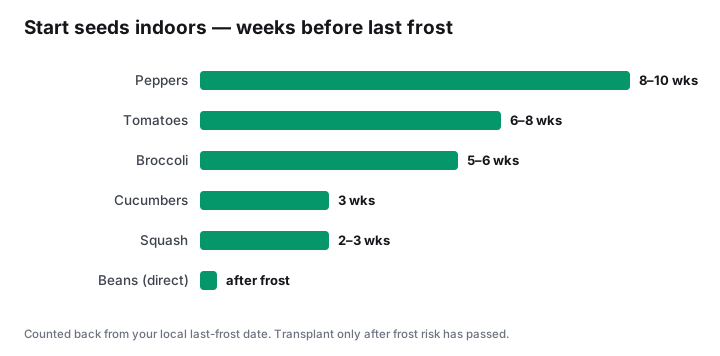
Starting seeds indoorsMost warm-season crops (tomatoes, peppers, eggplant) need 6–10 weeks indoors before transplanting. Count back from your last frost date to find your indoor start date.
🌿
Hardening off seedlingsSeedlings started indoors must be gradually acclimated to outdoor conditions over 7–14 days before transplanting. Start with 1–2 hours outside daily, increasing each day.
🗓️
Days to maturitySeed packets list "days to maturity" from transplant or direct sow. Subtract this from your first fall frost to find the latest possible planting date for that crop.
🧊
Row covers & frost clothA floating row cover (frost cloth) can protect plants down to 24–28°F, effectively extending your season 2–4 weeks in both spring and fall.
🪣
Succession plantingStagger plantings of fast crops like lettuce and radishes every 2–3 weeks for a continuous harvest rather than one large glut mid-season.
🌱
USDA Hardiness ZonesZones (3a–11b) describe average annual minimum winter temperatures. They're used for perennials — frost dates are more relevant for annual vegetables. Both matter for full garden planning.
☁️
Microclimates matterYour backyard may be warmer or cooler than the regional average. South-facing walls, slopes, and bodies of water all create local temperature variations. Observe your garden over multiple seasons.
📚 Trusted gardening resources
These are the most authoritative sources for gardening data, seed sourcing, and growing guidance.
The last frost date is the average date of the final below-32°F temperature in spring for your area. It represents a 50% probability — meaning in half of all years, frost will occur on or after this date. Conservative gardeners wait an additional 1–2 weeks past this date before transplanting frost-sensitive crops like tomatoes and peppers outdoors.
When should I start seeds indoors? ▼
Count backward from your last frost date by the number of weeks each crop needs indoors. Tomatoes and peppers need 6–8 weeks; eggplant needs 8–10 weeks; broccoli and cabbage need 4–6 weeks; herbs like basil need 4–6 weeks. The planting schedule table above calculates these dates automatically for your zip code.
What vegetables can survive frost? ▼
Many cool-season vegetables are frost-tolerant or even frost-hardy. Kale, spinach, arugula, and Brussels sprouts can survive temperatures down to 20–25°F. Broccoli, cabbage, carrots, beets, and peas tolerate light frost (28–32°F). Lettuce, chard, and cilantro tolerate light frost with some protection. Tomatoes, peppers, cucumbers, squash, and beans die at any frost — even a light one.
How do I protect plants from late frost? ▼
The most effective methods are: (1) Floating row covers or frost cloth — drape over plants and anchor edges; provides 4–6°F of protection. (2) Cloches or plastic bottles — individual covers for small plants or seedlings. (3) Cold frames — bottomless boxes with transparent lids that act as mini-greenhouses. (4) Watering before a frost — wet soil holds more heat than dry soil, keeping root zones warmer overnight. Watch the forecast closely during shoulder seasons and act before nightfall.
What is a USDA hardiness zone? ▼
USDA Plant Hardiness Zones (3a through 11b) are based on average annual minimum winter temperatures and are primarily used for perennial plants, trees, and shrubs — to determine what will survive winter in your area. They're updated periodically; the most recent map was released in 2023. For annual vegetables, frost dates are more useful than hardiness zones, though both matter for complete garden planning.
Can I grow vegetables year-round? ▼
In USDA zones 9–11 (Southern California, Florida, Gulf Coast, Hawaii), year-round outdoor gardening is possible with careful crop rotation between warm-season and cool-season vegetables. In colder zones, year-round growing requires a heated greenhouse or high tunnel. Many gardeners in zones 5–8 extend their season significantly with cold frames, row covers, and hoop houses, making late fall and early spring growing very productive.
📖 In-depth gardening guides
Go deeper on frost timing, seed starting, and season planning with our full-length guides.